The Review Contest is the most accessible of the Learning Network’s critical-writing contests: in about 450 words you review something — a book, film, TV show, album, video game, restaurant, exhibition, even a piece of technology — and make a clear judgement about whether it is any good and why. This independent guide explains what separates a review from a summary, and how to write one that lands.
Quick facts (2026)
| What it is | A short critical review with a clear judgement and evidence |
| What you can review | Almost anything cultural: book, film, show, album, game, restaurant, app |
| Length | About 450 words (confirm the live limit) |
| Who can enter | Students 13–19 worldwide · free |
| When | Typically spring (confirm the live window) |
| Official source | nytimes.com/section/learning |
A review makes a judgement; a summary does not
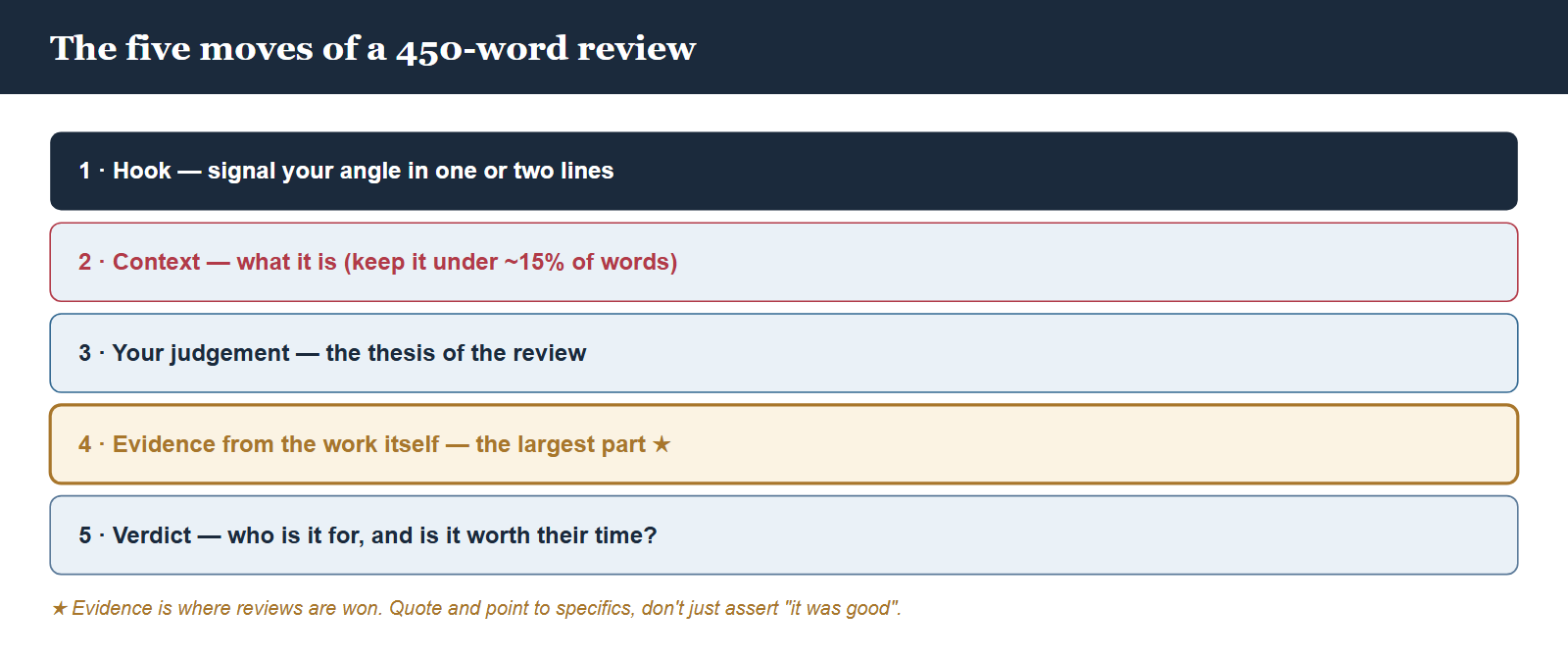
The defining move of a review is evaluation. A summary tells the reader what something contains; a review tells them whether it works, backs that verdict with specific evidence from the thing itself, and does it in a voice worth reading. If a reader could finish your piece and not know what you actually thought, you have written a summary. The Learning Network rewards reviewers who commit to a clear opinion — even a mixed one — and prove it with concrete detail rather than adjectives.
Choose something you can be specific about
The smartest strategic choice in this contest is what you review. Two tips. First, pick something you can discuss in concrete detail — a particular scene, lyric, level, dish or chapter — because specificity is the whole game. Second, consider reviewing something slightly off the beaten path: a thousand entries will review the year’s biggest blockbuster, and yours has to fight for attention; a well-argued review of a lesser-known novel, a regional film, or a game few have written about gives you fresher ground and a more curious reader. A review of something from your own cultural world — a Chinese film, a local restaurant, a translated novel — can be both specific and genuinely new to the judge.
Be fair, not just negative
New reviewers often think a sharp review means a harsh one. The strongest reviews are fair: they grant what works before explaining what does not, or note the flaws in something they admire. That balance signals a critic who is evaluating, not performing. A mixed verdict, argued well, is often more convincing — and more memorable — than unbroken praise or a takedown. End by telling the reader who this is for; “fans of X will love this, but newcomers should start elsewhere” is a real service, and exactly what good criticism does.
Frequently asked questions
What can I review for the NYT Review Contest?
Almost anything cultural — a book, film, TV show, album, video game, restaurant, exhibition or piece of technology. The key is that you can evaluate it with specific evidence, not just summarise it. Confirm current categories on the official Learning Network.
Questions about the contests?
Scan the WeChat QR code — we help with contest registration, one-on-one topic coaching, and full guidance to the deadline.
Scan the WeChat QR code

How long is a contest review?
About 450 words. Keep the summary short and spend most of your words on judgement and the specific evidence that supports it.
Should I review something popular?
Not necessarily. A well-argued review of a lesser-known work often stands out more than another review of the year’s biggest title, and reviewing something from your own cultural world can be fresh material for the judge.
What is the most common mistake?
Writing a summary instead of a review. If a reader cannot tell what you actually thought, the piece has no judgement — and judgement, backed by evidence, is the point.
This site is an independent editorial guide to The New York Times Learning Network’s free student writing contests, operated by Hanlin Education for China-based international-school students. We are not affiliated with, endorsed by, or sponsored by The New York Times Company or its Learning Network. Rules, word limits and dates change by season — always confirm the current rules on the official NYT Learning Network. Confirmed errors are corrected within 7 working days.