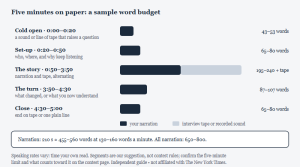
The STEM Writing Contest flips a familiar challenge: instead of proving you understand something hard, you have to make a general reader understand it too — a science, maths, technology, engineering or health topic explained clearly in about 500 words. This independent guide explains how to pick a topic, how to structure a strong explainer, and why it is one of the best contests for science-minded international students.
Quick facts (2026)
| What it is | Explain a STEM topic clearly for a non-expert reader |
| Length | About 500 words (confirm the live limit) |
| Evidence | You cite reliable sources — research, reporting or expert work |
| Who can enter | Students 13–19 worldwide · free |
| When | Typically winter (confirm the live window) |
| Official source | nytimes.com/section/learning |
The contest is about clarity, not difficulty
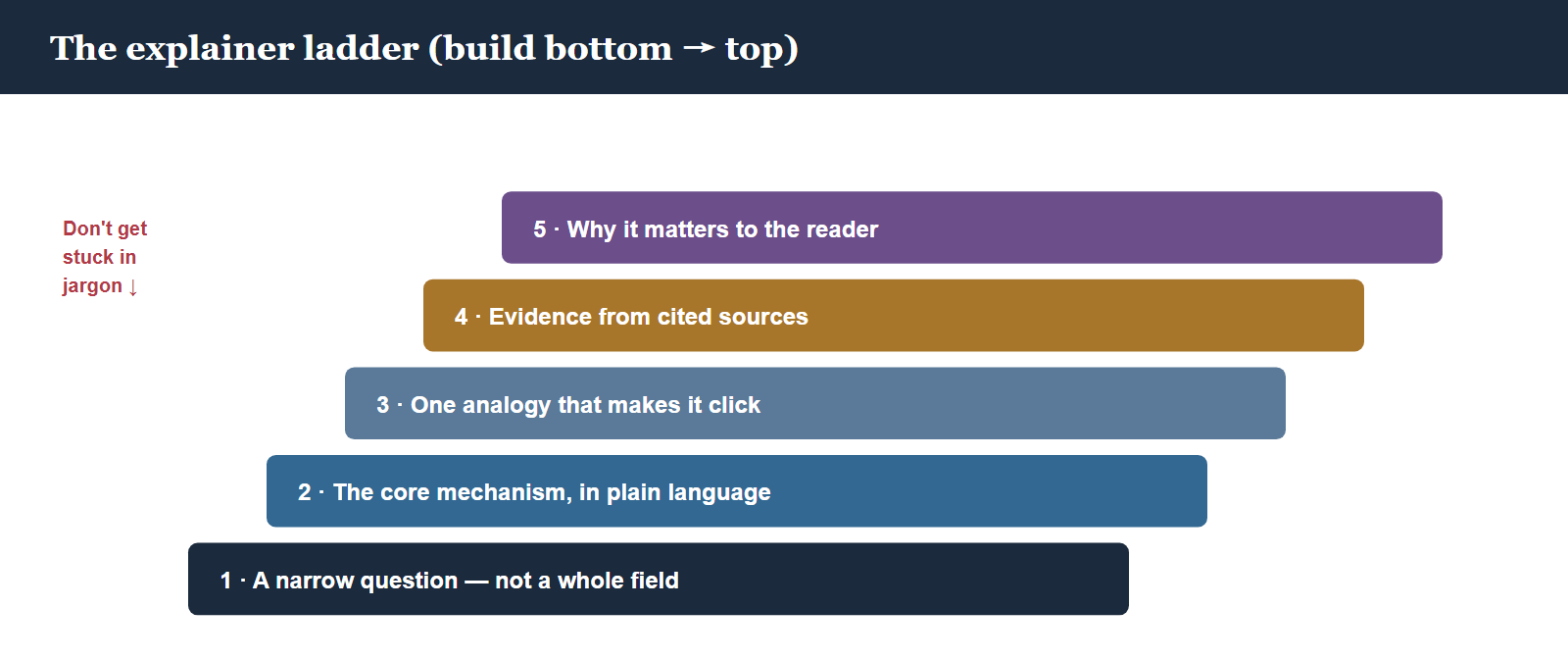
Strong science students often misread this contest. They pick the most advanced topic they know and write it the way a textbook would — and lose, because the judge is standing in for a curious reader who is not a specialist. The skill being tested is translation: taking something real and technical and making it land for someone smart but unfamiliar. The best entries usually take a narrow question — not “quantum computing”, but “why a quantum computer can try many answers at once” — and answer it with a clear line of reasoning, one good analogy, and a reason the reader should care.
The analogy is the hardest 50 words
A precise analogy is what separates a competent explainer from a memorable one, and it is genuinely hard to write. A good analogy maps the structure of the idea onto something the reader already knows — not just a vague “it’s like a highway”, but a comparison that holds up when you push on it. Spend real time here. Test your analogy on someone who does not study the subject: if they can re-explain the idea back to you after reading your 500 words, it worked. If they nod politely, it did not.
Why it suits science-minded international students
For students aiming at STEM degrees, this contest is an unusually useful signal. University readers see plenty of evidence that an applicant can do science; far rarer is evidence that they can communicate it — the skill that distinguishes researchers who get funded, papers that get read, and engineers who get promoted. A strong STEM Writing entry shows both at once. It also rewards exactly the bilingual, cross-context thinking many international students already have: explaining a concept clearly across a language and culture gap is the same muscle this contest tests. Pair it with our companion guides — the same precision is rewarded in the judging across all contests.
A quick topic test
Before you commit, run your topic through three questions. Is it narrow enough to actually explain in 500 words, or is it a whole field? Can you cite real sources for the key claims, or are you relying on memory? Is there a reason a general reader should care — a connection to health, daily life, the future, or a current question? If you can answer all three, you have a contest-ready topic. If not, narrow it until you can.
Frequently asked questions
How long is the STEM Writing Contest entry?
About 500 words. The limit forces you to explain one narrow idea well rather than survey a whole field. Confirm the exact word count on the official Learning Network each year.
Questions about the contests?
Scan the WeChat QR code — we help with contest registration, one-on-one topic coaching, and full guidance to the deadline.
Scan the WeChat QR code
Do I have to cite sources?
Yes. The contest expects claims to be backed by reliable sources — research, reporting or expert work — and entries include the sources used. Choose a few strong references over a long list.
Should I pick an advanced topic to impress judges?
No. The contest rewards clarity, not difficulty. A narrow topic explained so a non-expert understands it beats an advanced topic written like a textbook.
Why is this contest good for STEM applicants?
It demonstrates the ability to communicate science, not just do it — a rarer and highly valued signal for university readers and a strong complement to research or olympiad results.
This site is an independent editorial guide to The New York Times Learning Network’s free student writing contests, operated by Hanlin Education for China-based international-school students. We are not affiliated with, endorsed by, or sponsored by The New York Times Company or its Learning Network. Rules, word limits and dates change by season — always confirm the current rules on the official NYT Learning Network. Confirmed errors are corrected within 7 working days.