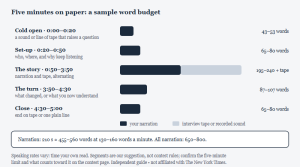
The Personal Narrative Contest asks for something deceptively hard: one small, true story from your own life, told well, in about 600 words. Not your whole biography, not your greatest achievement — a single moment that meant something. This independent guide explains how to find that moment, how to structure it so it lands, and why an international student’s own world is the richest possible material.
Quick facts (2026)
| What it is | A short true story from your life — narrative, not argument |
| Length | Short — around 600 words (confirm the live limit) |
| The test | Can you make a small moment feel meaningful to a stranger? |
| Who can enter | Students 13–19 worldwide · free |
| When | Typically autumn (confirm the live window) |
| Official source | nytimes.com/section/learning |
Find the moment, not the topic
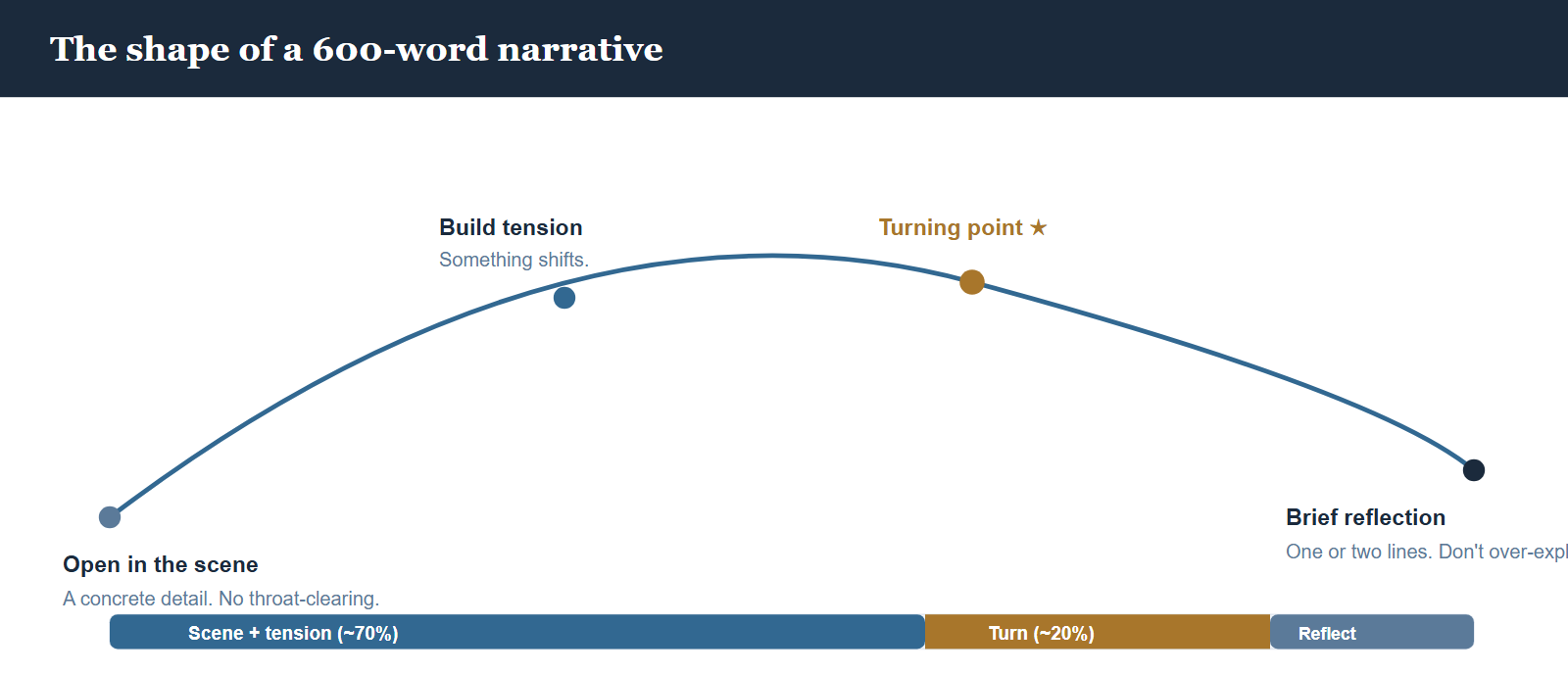
The most common mistake is to choose a topic — “moving countries”, “my grandmother”, “learning English” — and then try to cover the whole thing in 600 words. That produces a summary, not a story. Winning narratives do the opposite: they zoom in on a single scene, often only a few minutes long, and let one small moment carry a much larger meaning. The grandmother story becomes the afternoon she taught you to fold dumplings in silence after an argument. The move becomes the first lunch break alone in a new cafeteria. Small is not a limitation here — small is the whole craft.
Show, don’t summarise
The line that wins this contest is show, don’t tell, and it is concrete advice, not a slogan. “I was nervous” tells. “I read the same sentence four times and still could not have said what it meant” shows. Judges are reading hundreds of narratives that announce their feelings; the ones that stay with them put the reader inside the moment through specific sensory detail — what you saw, heard, did — and trust the reader to feel it. Save the explaining for one or two lines at the end, and even there, resist tying a neat bow on it.
| Instead of telling… | Show it |
| “My mother was proud of me.” | “She didn’t say anything, but she kept the certificate on the fridge for a year.” |
| “The classroom felt unfamiliar.” | “Everyone already knew which seats were theirs.” |
| “I finally felt at home.” | “I caught myself dreaming in a second language.” |
Why your context is an advantage
International and China-based students sometimes worry their lives are “less interesting” to a New York audience. The opposite is true. A specific, honestly told moment from a world the reader does not already know — a Lunar New Year that fell during exam season, a grandparent’s village, the particular loneliness of a boarding dorm far from home — is exactly the kind of fresh, concrete material that stands out in a pile of familiar stories. You are not competing on whose life is most dramatic; you are competing on who notices and renders one small moment most precisely. That is a skill you can practise, and your own world is the best place to find it.
A simple drafting plan
Start by listing five small moments you still remember vividly — not because they were important on paper, but because something about them stuck. Pick the one you can still see most clearly. Write it long first (900 words is fine), getting every detail down, then cut hard to the contest limit, keeping the concrete and removing the explaining. Read it aloud once: narratives that sound like a person talking almost always beat ones that sound like an essay. For how this entry can later feed a college application, see our overview of the contests, and check the deadline against your calendar in our contest calendar.
Frequently asked questions
How long is the Personal Narrative Contest entry?
Short — around 600 words. The limit pushes you toward one focused moment rather than a whole life story. Confirm the exact word count on the official Learning Network each year.
Questions about the contests?
Scan the WeChat QR code — we help with contest registration, one-on-one topic coaching, and full guidance to the deadline.
Scan the WeChat QR code

What should I write about?
One small, true moment from your own life that meant something — not your biggest achievement. A few vivid minutes, shown in concrete detail, beats a broad summary of a major event.
Can the story be about my own country or culture?
Yes, and it often helps. A specific moment from a world the reader does not already know is fresh material, as long as it is rendered in precise, concrete detail rather than explained.
What is the single best technique?
Show, don’t tell. Put the reader inside the moment through what you saw, heard and did, and keep reflection to a line or two at the end.
This site is an independent editorial guide to The New York Times Learning Network’s free student writing contests, operated by Hanlin Education for China-based international-school students. We are not affiliated with, endorsed by, or sponsored by The New York Times Company or its Learning Network. Rules, word limits and dates change by season — always confirm the current rules on the official NYT Learning Network. Confirmed errors are corrected within 7 working days.