Home › News
News & Updates
Deadlines, results and guidance for The New York Times Learning Network writing contests.
-
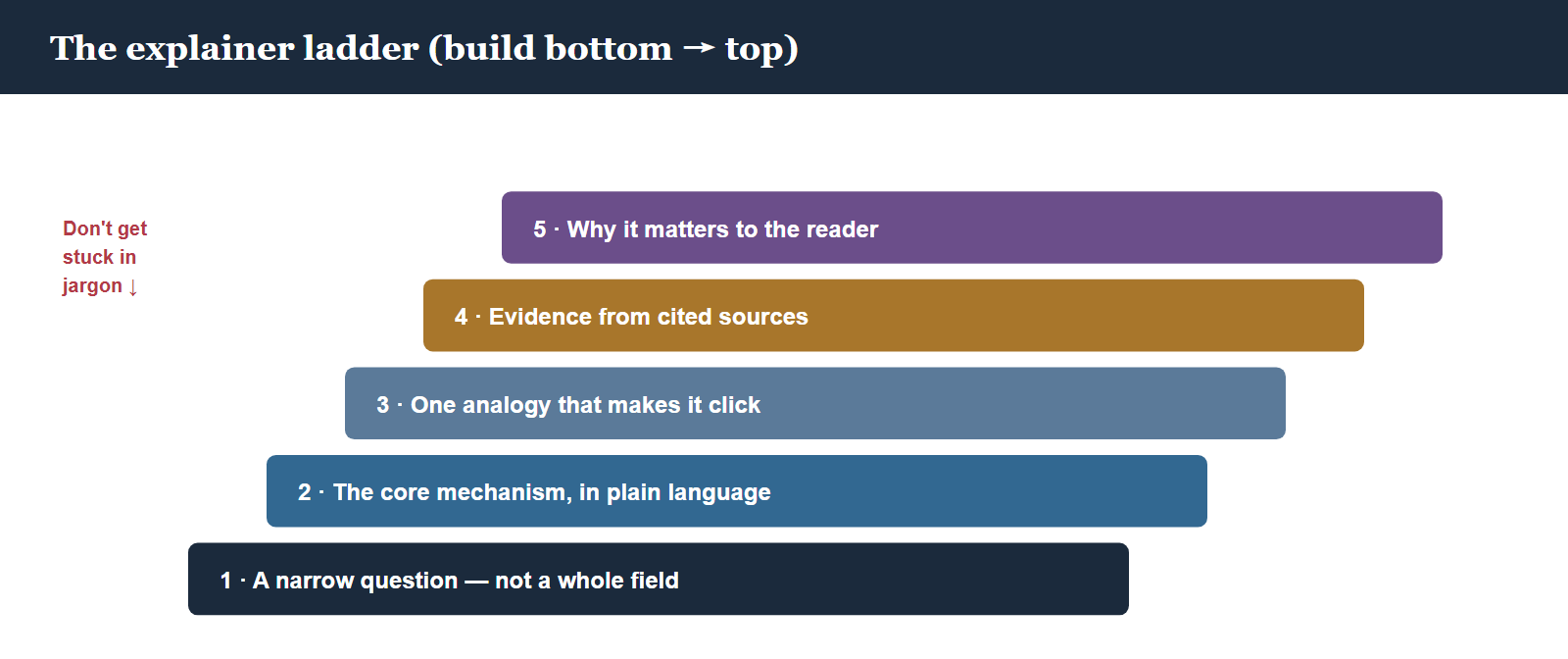
The NYT STEM Writing Contest: Explaining Science for a General Audience (2026)
The New York Times Learning Network STEM Writing Contest asks students to explain a science, maths, technology, engineering or health topic clearly for a general audience in about 500 words. This independent guide explains how to choose a topic, the explain-it-to-anyone structure that wins, and why it is a strong signal for science-minded international students.
-
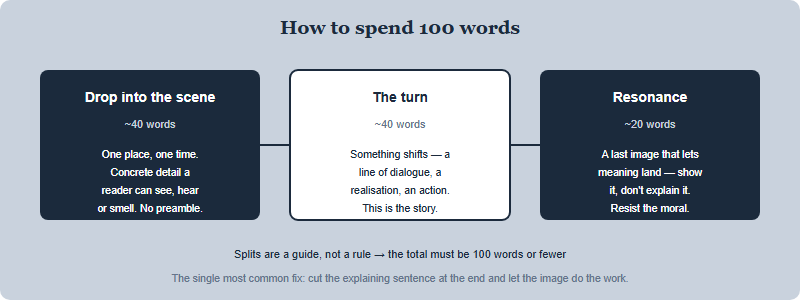
The NYT 100-Word Tiny Memoir Contest (2026-27): How to Tell One True Story for International Students
A student guide to the NYT 100-Word Tiny Memoir Contest for 2026-27 (entries 16 September – 28 October 2026, closing 11:59 p.m. U.S. Pacific): the true-story rule, ages 13-19 eligibility, the artist’s statement, the new ban on AI drafting and translation, and a compression method that works.
-
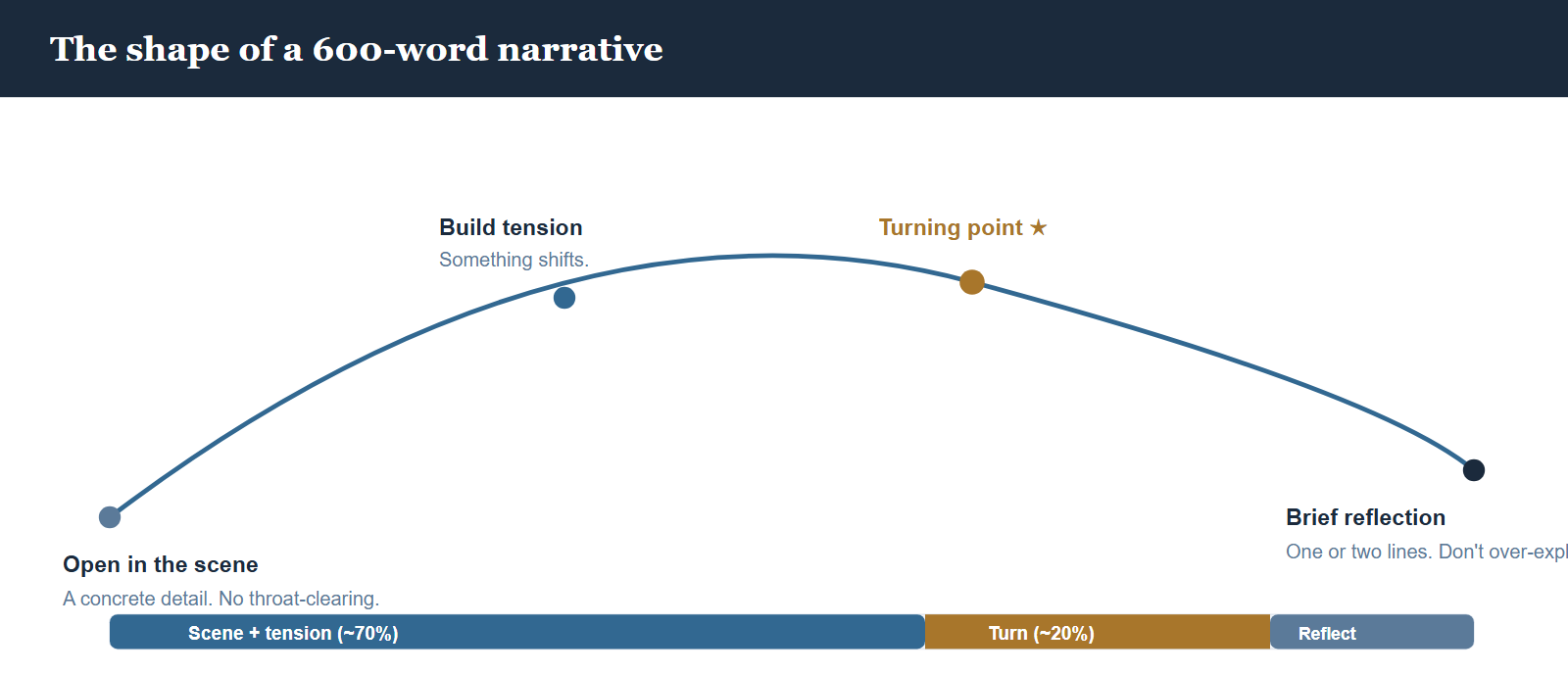
The NYT Personal Narrative Contest: A Step-by-Step Guide with Worked Examples (2026)
The New York Times Learning Network Personal Narrative Contest asks students to tell one small, true story from their own life in about 600 words. This independent guide explains how to find a moment worth telling, the show-don’t-summarise structure that wins, and how international and China-based students can make their own context an advantage.
-
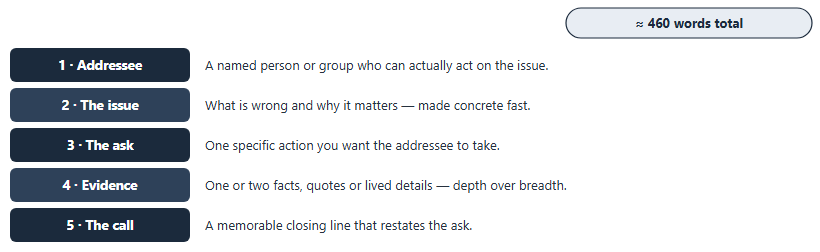
New York Times Open Letters Contest: How to Enter & Write a Winner (2026)
What the NYT Learning Network’s Open Letters opinion-writing contest asks for — a short public letter of protest or appeal — plus who can enter, the deadline window, and how to write one that stands out.
-
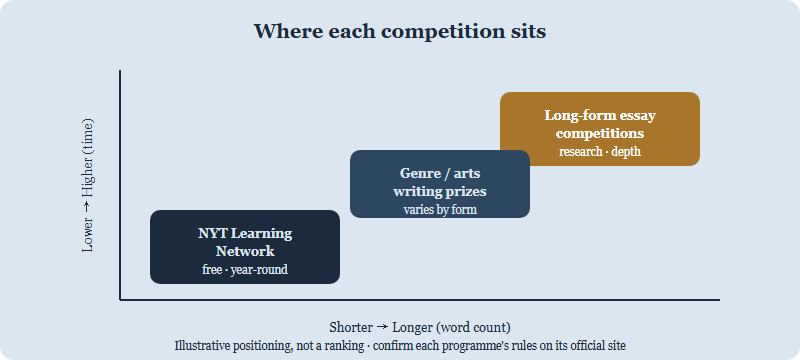
NYT Writing Contests vs. Other Essay Competitions (2025-26): Which Fits Your Goal?
How do the free New York Times Learning Network writing contests compare to long-form essay competitions and other student writing prizes? This independent guide maps the differences in length, cost, format and admissions signal, and helps international students decide which competition fits their goal.
-
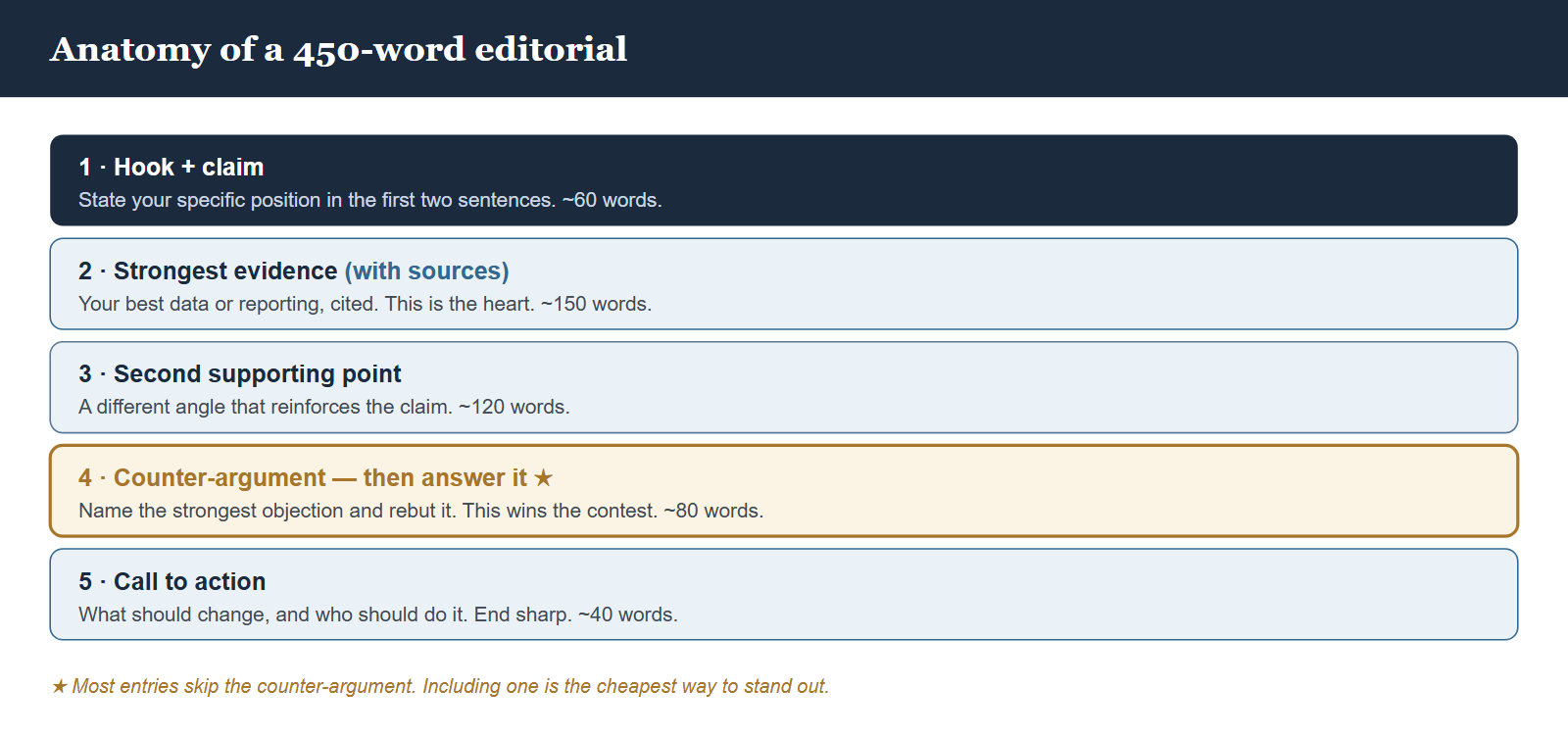
The NYT Student Editorial Contest: Structure, Rules and What Judges Reward (2026)
The Student Editorial Contest is the flagship of the New York Times Learning Network: argue a position in about 450 words, backed by evidence. This independent guide breaks down the structure of a winning editorial, the rules that trip students up, and what judges actually reward — with practical notes for international and China-based students.
-
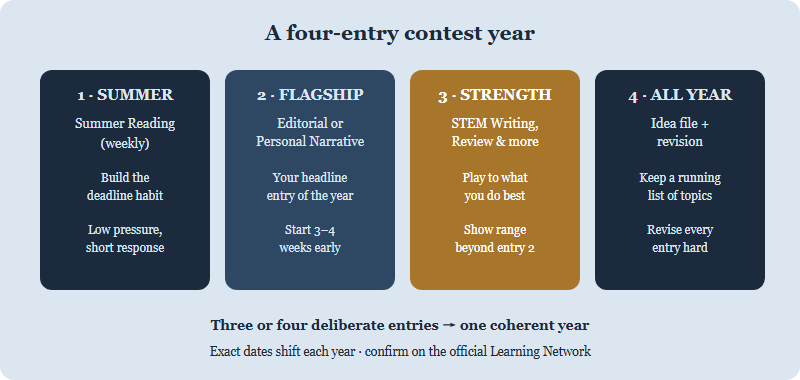
Build a NYT Writing Contest Portfolio Across One School Year (2025-26): A Strategy for International Students
Entering one New York Times Learning Network contest is good; sequencing three or four across a school year into a coherent writing portfolio is what builds a real admissions signal. This independent guide shows international students how to plan a year, pick a through-line, and turn separate entries into evidence of a developing writer.
-
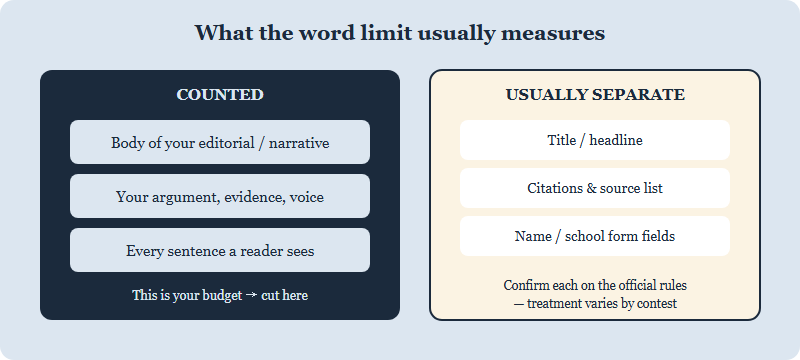
NYT Writing Contest Word Limits and Format Rules, Decoded (2025-26): What Actually Counts
Every New York Times Learning Network writing contest is won or lost inside a tight word limit and a strict format. This independent guide decodes what counts toward the limit, how multimedia and audio entries are measured, what the submission form expects, and the disqualification traps that catch careful international students.
-
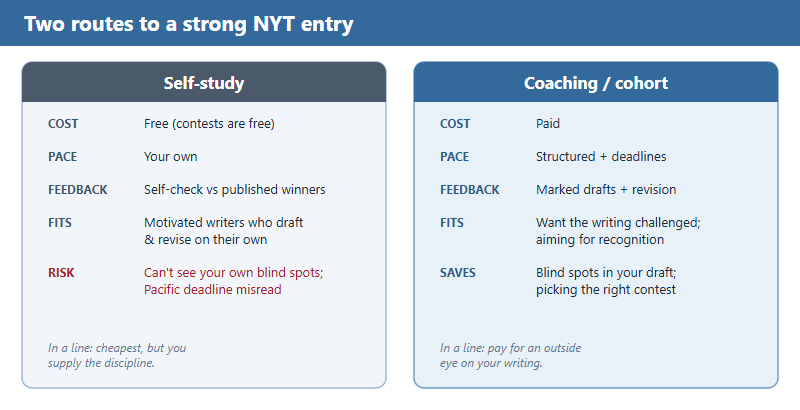
How to Prepare for the NYT Writing Contests: Self-Study vs Coaching & a Per-Contest Roadmap (2026)
There are two honest routes to a strong New York Times writing-contest entry: self-study and coaching. This independent guide compares them across the editorial, narrative and STEM contests, gives a four-phase roadmap, and transparently shares our writing-coaching track record. Not affiliated with The New York Times Company or its Learning Network.
-
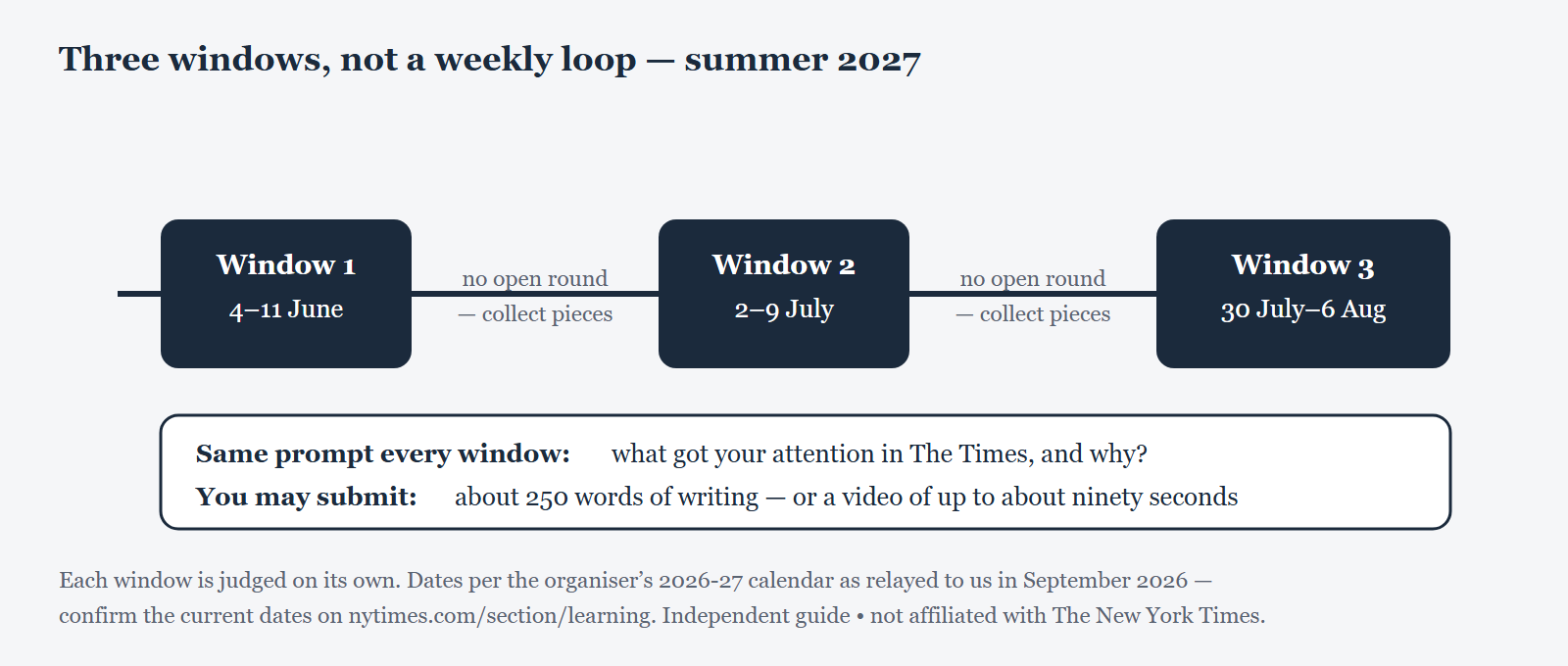
The NYT Summer Reading Contest: How International Students Can Enter and Win (2026-27)
The New York Times Learning Network Summer Reading Contest — listed for 2027 as Voice and Choice — moved from a weekly summer loop to three submission windows, and now accepts a short written response or a video. This independent guide explains the windows, what a strong response contains, and how a student in China…