The NYT Summer Reading Contest has long been a staple for global teenagers seeking to sharpen their critical thinking and writing skills. For the 2026-2027 academic year, the New York Times Learning Network has introduced a significant structural change: the contest is no longer an open-ended weekly marathon but is condensed into three specific submission windows. This shift demands a new preparation strategy.
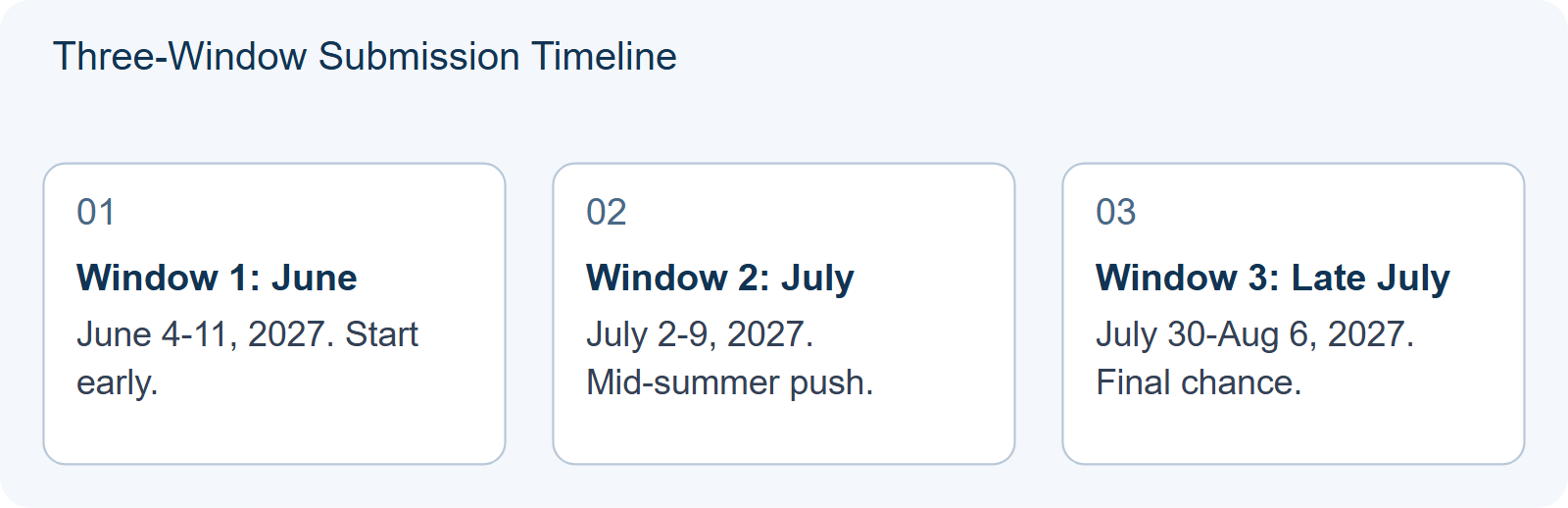
Previously, students could submit entries every week throughout the summer. Now, participation is limited to three defined periods: June 4–11, July 2–9, and July 30–August 6, 2027. Contrary to some misconceptions, this does not mean you can only enter once in total. You may submit during any or all of these three windows, provided you adhere to the “once per week” limit within each active period. This compression allows for deeper reflection rather than rushed, low-effort entries.
Understanding the Three-Windows Structure
The reduction from ten potential weeks to three concentrated windows changes the pacing of your engagement. Instead of treating the contest as a background activity, you must treat each window as a focused sprint. The prompt remains consistent: “What interested you most in The Times this week? Why?” However, the scarcity of opportunities means each submission carries more weight in your portfolio.
| Window Period | Strategic Focus | Preparation Tip |
|---|---|---|
| June 4–11, 2027 | Early Summer Reflection | Identify a major news theme before school ends. |
| July 2–9, 2027 | Mid-Summer Depth | Use vacation time for extensive reading and drafting. |
| July 30–Aug 6, 2027 | Back-to-School Perspective | Connect personal growth with current events. |
The New AI Transparency Rules
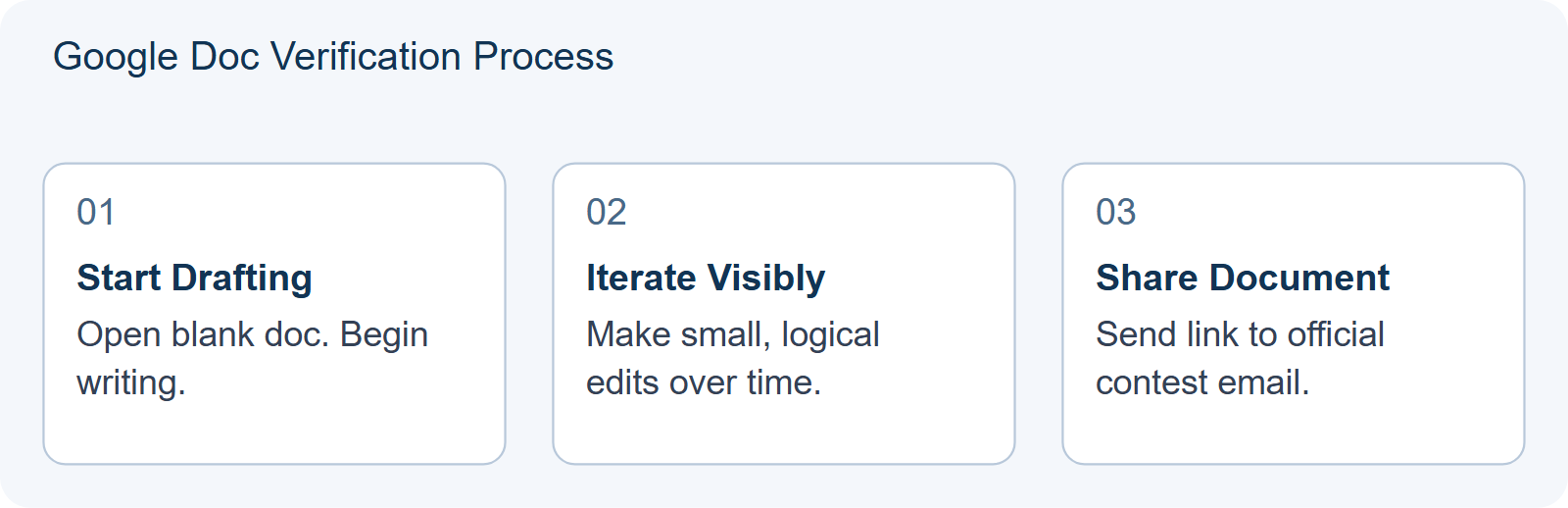
A critical update for the 2026-2027 cycle is the strict enforcement of originality. The New York Times has implemented a zero-tolerance policy for generative AI in any part of the creation process. To verify authenticity, written submissions must be composed entirely within a Google Doc. Students must share this document with the official contest email address.
This requirement leverages Google Docs’ version history feature. Judges will review the edit trail to see your thought process evolve from initial drafts to final polish. This is not merely an anti-cheating measure; it is an assessment tool. A clean, linear progression of edits demonstrates genuine intellectual engagement. Sudden large blocks of text appearing without prior drafts may raise red flags. Therefore, your preparation should include practicing iterative writing—drafting, revising, and refining visibly within the platform.
Preparing for the Short-Form Challenge
Entries are limited to approximately 250 words or 1,500 characters, or alternatively, a 90-second video. With fewer opportunities to submit, the quality bar effectively rises. You cannot rely on volume to increase your chances of selection. Instead, focus on precision.
For written entries, choose articles that resonate personally but also have broader public significance. Avoid vague summaries. Instead, use specific details from the article to anchor your argument. Connect the topic to your own experiences or observations, ensuring the piece feels authentic rather than generic. If you are considering other formats, such as the Audio Stories Podcast Contest, note that different skills apply, but the principle of authentic voice remains central.
For those interested in visual storytelling, the NYT Visual Art Contest offers another avenue for expression, though it operates on a separate timeline. Similarly, if your interest lies in scientific inquiry, the STEM Interview Video Contest requires a different approach to research and presentation.
Strategic Advice for Prospective Participants
1. **Map Your Calendar**: Mark the three windows immediately. Plan which weeks you will read intensively.
2. **Practice Version History**: Before the contest starts, write a short essay in a Google Doc, making multiple visible revisions. Ensure your editing style looks natural and progressive.
3. **Curate Your Sources**: Do not wait until the window opens to find an article. Subscribe to newsletters or follow specific sections of The Times that align with your interests.
4. **Draft Early**: Use the days between windows to refine ideas. When a window opens, you should already have a strong concept ready to execute.
The compressed format of the NYT Summer Reading Contest rewards depth over breadth. By understanding the rules around submission windows and AI transparency, you can position yourself to create compelling, authentic work that stands out to judges.
Questions about the contests?
Scan the WeChat QR code — we help with contest registration, one-on-one topic coaching, and full guidance to the deadline.
Scan the WeChat QR code

HYPOTHETICAL/ILLUSTRATIVE: Choosing Your Anchor Article for the July Window
To understand how the three-window structure impacts your preparation, consider a hypothetical scenario involving a student named Alex. Alex has identified two potential articles from The New York Times to serve as the foundation for their July 2–9 submission. The first is a breaking news report on a local city council vote regarding zoning laws. The second is a long-form feature article exploring the psychological effects of remote work on team cohesion over the past five years.
Alex must decide which piece to analyze within the strict 250-word limit and the requirement for visible iterative drafting in Google Docs. This decision illustrates the shift from volume-based participation to depth-focused strategy. In previous formats, Alex might have submitted the quick news reaction simply because it was timely. However, under the new compressed schedule, each window represents a rare opportunity to showcase critical thinking. The “once per week” rule means Alex cannot submit both; they must choose the entry that offers the highest potential for authentic engagement and clear version history progression.
The zoning law article presents a challenge for short-form writing. It requires summarizing complex bureaucratic details quickly, leaving little room for personal reflection or broader thematic connection. If Alex chooses this, their draft might look like a condensed summary rather than an analytical essay. Conversely, the remote work feature allows for deeper introspection. Alex can connect the article’s findings to their own experiences with online schooling or family dynamics during the pandemic. This personal link creates a unique voice that generic summaries lack.
| Criterion | Option A: Zoning News Report | Option B: Remote Work Feature |
|---|---|---|
| Depth of Analysis | Low (Fact-heavy) | High (Thematic) |
| Personal Connection | Weak (External event) | Strong (Internal experience) |
| Drafting Potential | Static (Hard to revise meaningfully) | Dynamic (Allows for nuanced argument shifts) |
| Version History Clarity | Risky (May appear copied if not careful) | Clear (Shows evolution of thought) |
In this illustrative case, Alex selects Option B. During the days leading up to the July window, Alex drafts an initial response focusing solely on the article’s statistics. Over several days, they revise the document multiple times. First, they add a paragraph connecting the data to their own feelings of isolation during online classes. Next, they refine the tone to be less anecdotal and more analytical. Finally, they trim the word count to meet the 250-word limit while preserving the core argument. When the window opens, Alex submits the final version. The judges reviewing the Google Doc see a linear progression: from raw observation to structured argument, then to polished concision. This visible workflow demonstrates genuine intellectual labor, satisfying the AI transparency requirements without needing external verification tools.
This example highlights that the choice of source material is now a strategic preparation step, not just a reactive one. Students should evaluate articles based on their capacity to sustain deep reflection within a tight word count. A reusable self-check for prospective participants is to ask: “Can I trace my thought process from a simple reaction to a nuanced argument using only this article?” If the answer is no, the article may be too narrow or too broad for the contest’s current format. By prioritizing pieces that invite personal synthesis, students align their preparation with the contest’s emphasis on authenticity and depth over speed and volume.
Frequently Asked Questions
Can I submit to all three windows?
Yes. The rules state participation opportunities are reduced to three windows, but do not restrict you to entering only one. You can submit once per week during any active window.
Is AI completely banned?
Yes. Generative AI cannot be used in any part of the creation process. Submissions must be composed in a Google Doc so judges can view the version history to verify human authorship.
Who is eligible to participate?
Students aged 13-19 worldwide are eligible. Children and relatives of New York Times employees are excluded.