Home › News
News & Updates
Deadlines, results and guidance for The New York Times Learning Network writing contests.
-
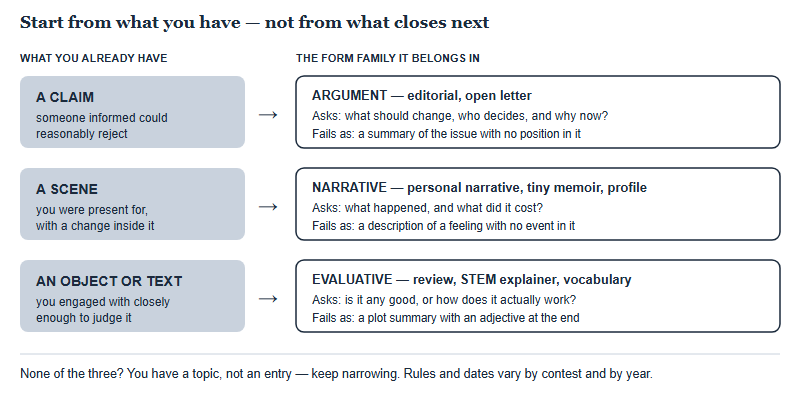
One Idea, Several Forms: Which NYT Writing Contest Does Your Idea Actually Belong In? (2026-27)
Most students enter whichever contest closes soonest. Better to work backwards from what you actually have: a claim, a scene, or an object you can judge.
-
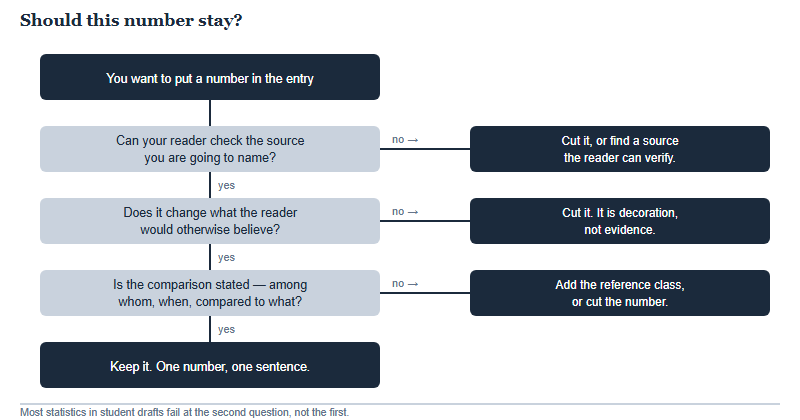
Writing With Numbers: How to Use a Statistic in a Short NYT Contest Entry Without Getting It Wrong (2026)
A number earns its place only when it changes what a reader believes. How to frame, attribute and pressure-test a statistic inside a very short contest entry.
-
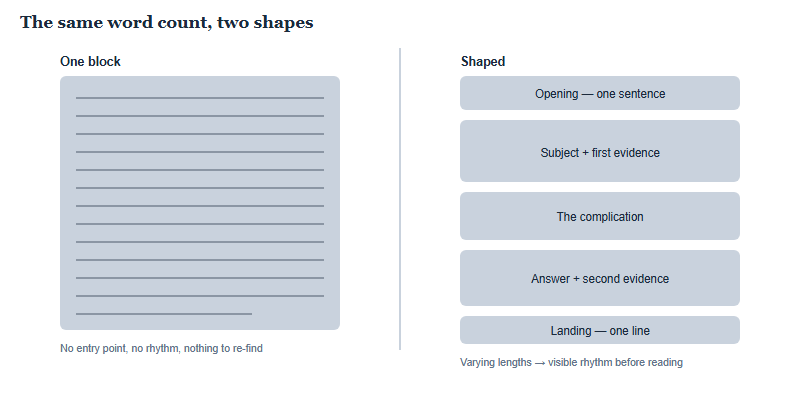
The Shape of a Short Contest Entry: Paragraph Order, Breaks and the Middle That Loses Readers (2026)
Openings and endings get all the attention, but most short contest entries lose their reader in the middle. A guide to paragraph order, breaks and shape on screen.
-
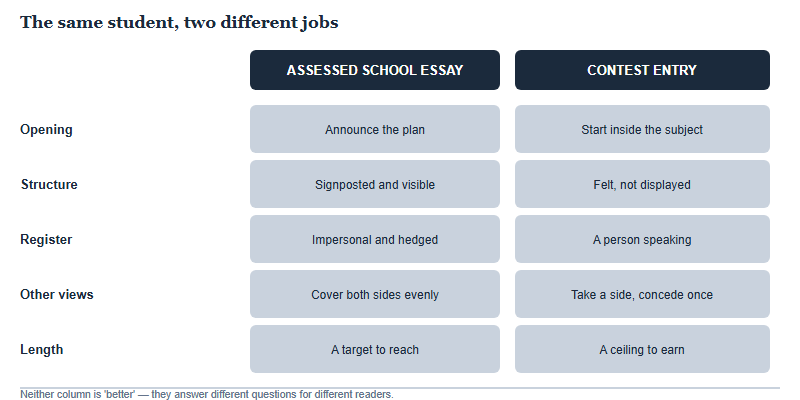
Unlearning the School Essay: The IB and AP Habits That Sink a NYT Contest Entry (2026-27)
The habits that earn marks in IB, AP and A-Level essays are the same habits that flatten a NYT contest entry. What to unlearn, what to keep, and how to tell.
-
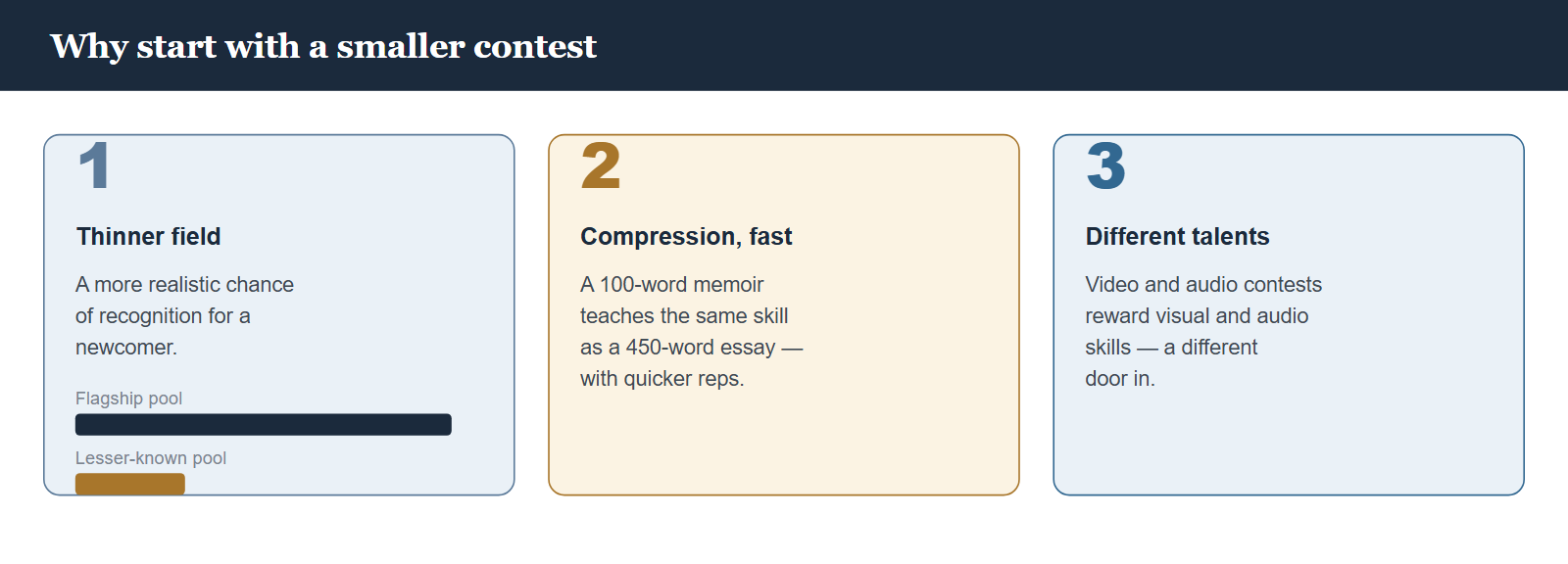
NYT Vocabulary, Multimedia and ‘Why I Write’ Contests: The Lesser-Known Wins (2026)
Beyond the flagship essay contests, the New York Times Learning Network runs lesser-known competitions — Vocabulary, podcast, multimedia, tiny memoir and open-ended challenges. This independent guide explains these lower-competition opportunities and why they are smart entry points for international students new to the contests.
-
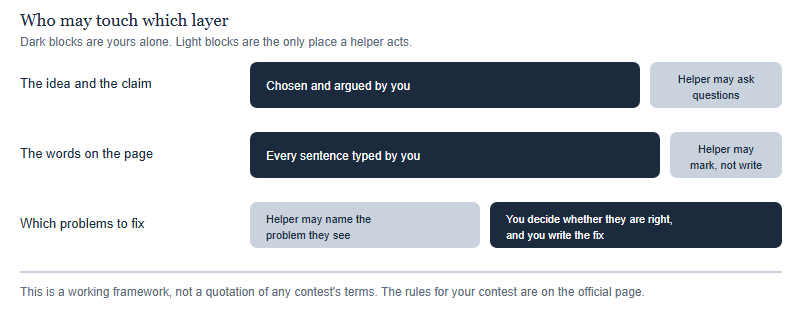
How Much Help Is Allowed on a NYT Contest Entry? Teachers, Tutors and Parents (2026)
Where the line sits between allowed support and an entry that is no longer yours: three layers of authorship, the handback test, and what to do if a draft has gone too far.
-
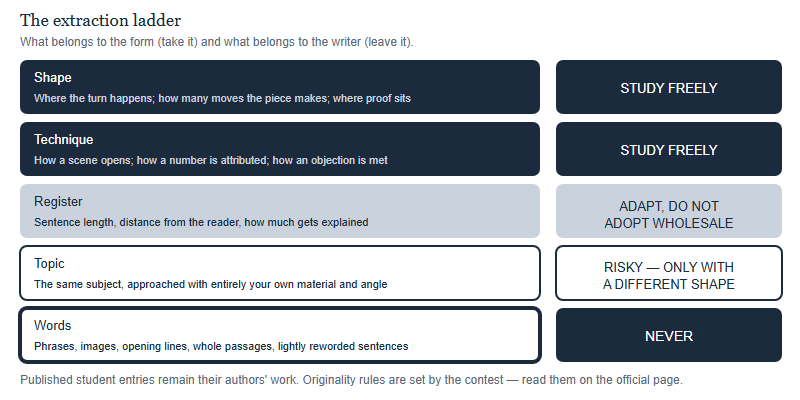
How to Study Past NYT Contest Winners Without Copying Them (2026)
Winning entries are the best available model and the easiest thing to plagiarise by accident. An extraction ladder, a 20-minute reverse outline, and the three ways this backfires.
-
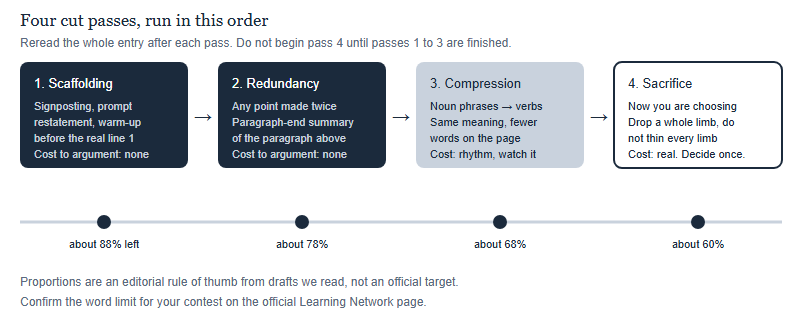
How to Cut 40% From a Contest Entry Without Losing the Argument (2026)
Over the limit? Cut in four passes, in order. A safe-cut ladder, six sentence swaps that buy words for free, and what to do when the last cut starts costing you the argument.
-
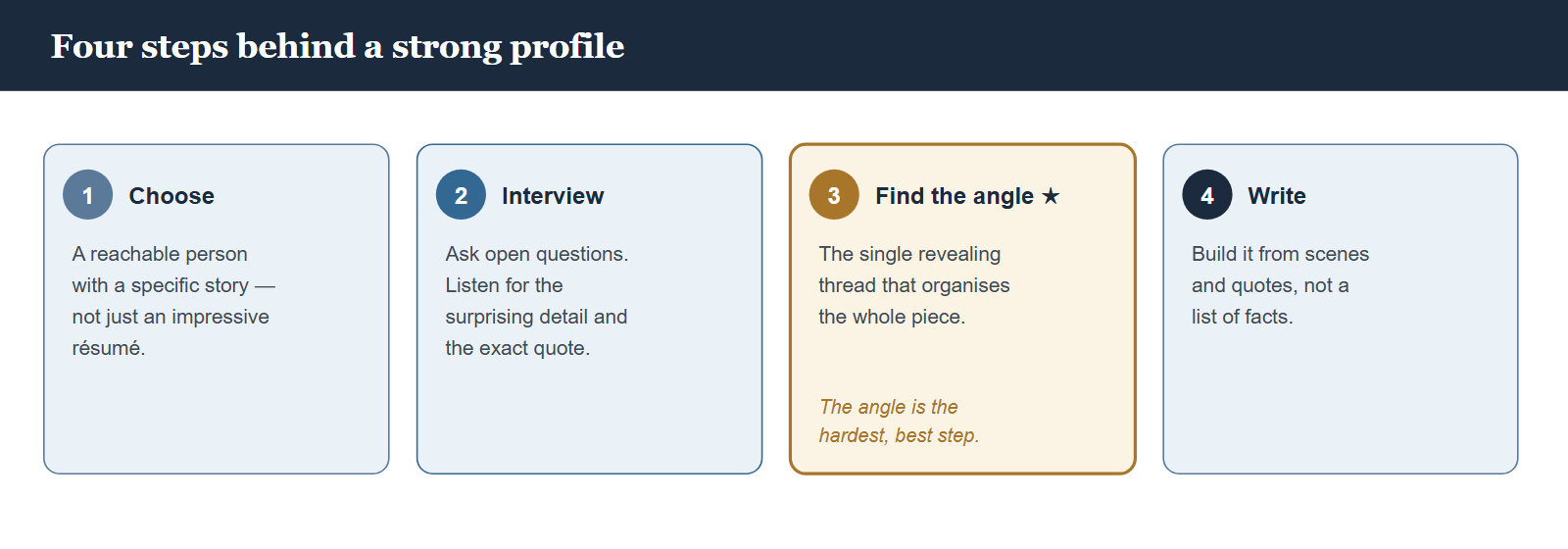
The NYT Profile & ‘Coming of Age’ Contests: Reporting a Real Person’s Story (2026)
The New York Times Learning Network’s Profile and Coming of Age contests ask students to report and write about a real person or a real moment of growing up. This independent guide explains the reporting process behind a strong profile, how it differs from a personal narrative, and why an international student’s community is full…
-
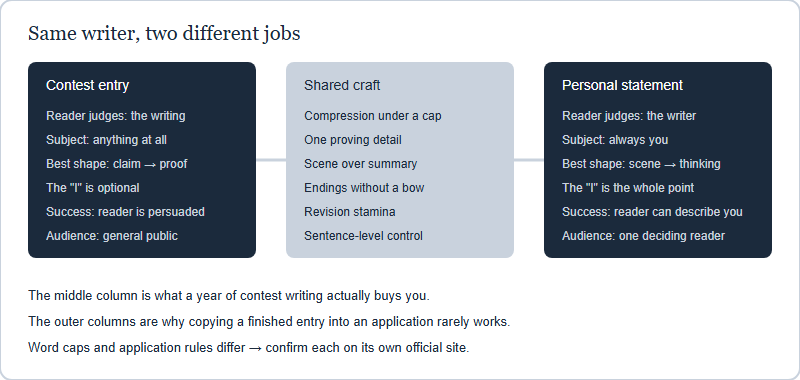
From a Contest Entry to a Personal Statement: What Transfers and What Does Not (2026)
Contest writing builds skills that carry into a personal statement, and habits that quietly wreck one. What transfers, what hurts, and a six-step reuse workflow.